Fluid Bed Dryer Process
This article walks through the process of a fluid bed drying cycle, from the loading of materials to the discharge of dried solid particles. It also covers how a vibrating fluid bed dryer changes during specific steps in the cycle.
Loading and Startup
Operators load measured batches of materials into the drying chamber, then start the blower and heater together. Airflow ramps up gradually rather than all at once, since jumping straight to full velocity can blow materials out of the chamber before the bed has settled into a stable fluidized state.
Once airflow crosses the minimum fluidization velocity for the materials, the bed transitions from a static pile to a suspended, moving mass, and the drying phase begins.
The Fluidization and Drying Phase
During steady-state operation, hot air continues moving through the bed while materials remain suspended and continue drying. Operators typically track the temperature difference between the inlet air and the exhaust air: a wide gap means the air is still giving up most of its heat to evaporate moisture, while a narrowing gap signals that the materials are approaching the targeted moisture level.
This phase can run anywhere from several minutes to several hours, depending on the materials' initial moisture content, particle size, and heat sensitivity.
Determining the Drying Endpoint
Rather than running on a fixed timer alone, most operators confirm the endpoint using exhaust air temperature or humidity readings, sometimes backed up by periodic sampling. Stopping too early leaves residual moisture that can cause caking or spoilage later, while running too long wastes energy and, for heat-sensitive materials, risks degrading product quality.
Cooling and Discharge
Once the endpoint is reached, many fluid bed dryers switch to unheated air to cool materials while they are still fluidized, avoiding the need to move hot products to a separate cooling chamber. After cooling, an outlet valve or gate opens and the materials are discharged, either by gravity or with the help of continued airflow or vibration to clear the chamber.
Cleaning and Changeover Between Batches
Before the next batch begins, the distributor plate, chamber walls, and filters need to be cleared of residual materials, whether through a manual wipe-down or an automated clean-in-place cycle. This step comes after the discharge and before the next load-in, and its thoroughness directly affects whether trace amounts of the previous batch's materials are carried over into the next one.
How Vibration Changes This Cycle
In a vibrating fluid bed dryer, vibration assists the startup step by helping sticky or cohesive materials fluidize at a lower air velocity than a standard unit would need. At discharge, the same vibration helps move materials toward the outlet in sequence, so materials added first tend to leave first, reducing the amount left behind between batches.
Electronics Manufacturing
- Barium titanate
- Silicon carbide
- Alumina
(VH Type)CHUO KAKOHKI (JPN)

(https://www.chuokakohki.co.jp/dryer.html)
- Ideal for Purity-critical materials like SiC. Sliding-part-free design prevents contamination, while vacuum drying protects against thermal degradation.
- Precision developed through more than 200 drying tests each year*1 delivers uniform drying while preserving material properties, contributing to high-quality semiconductor production and improved productivity.
Fuel Production
- Coal
- Aggregates and industrial sand
- Wood chips

(https://carriervibrating.com/equipment/dryers/)
- Unique electronic control automatically adjusts to different drying times based on the type and condition of minerals and sand.
- Vibration intensity and feed speed adjust according to moisture content and viscosity, helping reduce variation in moisture content.
Food Manufacturing
- Granulated food powders
- Active pharmaceutical ingredients
- Plant-based protein
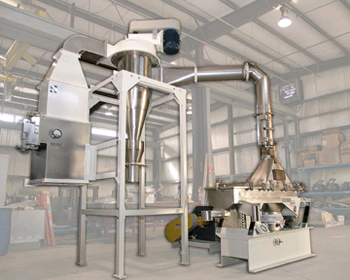
(https://www.witte.com/new-food-grade-process-equipment-integrates-drying-classifying-and-fines-collection-in-a-single-sanitary-sound-attenuated-pilot-sized-unit/)
- Most structural materials are made of stainless steel. Hygienic design that meets USDA, FDA, and 3-A standards*2.
- Tool-free disassembly enables easy cleaning and inspection across drying, cooling, and classification sections—supporting efficient maintenance and contamination prevention.
*1 from official Website (https://www.v-dryer.jp/dryingtest.html)
*2 Related to contact with food and dairy products.