Optimizing Fluid Bed Dryer Capacity: Factors Affecting Throughput and Scalability
This article explains the factors that affect the throughput of a fluid bed dryer. It also explains vibration and indirect heating technologies that can further improve throughput.
The Relationship Between Throughput and Capacity in Fluid Bed Dryers
A larger dryer does not necessarily mean higher throughput. Throughput depends heavily on the amount of moisture evaporated per hour. To achieve consistent drying quality, it is essential to understand this indicator.
How Fluid Bed Dryers Deliver Their Benefits
Rapid Heat Exchange
The material is suspended in hot air, allowing its entire surface to come into contact with the air and improving heat transfer efficiency. Compared with static drying methods, this method offers better drying efficiency and can maintain high throughput even with a limited installation footprint.
Fewer Process Steps Through Multifunctionality
Some models can continuously perform drying, mixing, granulation, and cooling in a single vessel. Reducing the need to transfer materials helps shorten the process.
Handling Delicate Materials
Because the hot air acts as a cushion, it helps reduce severe impacts and wear. Even fragile materials, such as crystals and porous materials, can be dried while maintaining quality.
Technical Challenges That Limit Capacity and Contamination Risks
Cleaning and Downtime
In industries where cross-contamination control is essential, the equipment must be stopped during cleaning. Larger equipment takes longer to clean, so even if the unit itself has high throughput, long downtime can reduce overall output.
Ambient Air Contamination and Filter Management
Fluid bed dryers use large volumes of hot air to suspend materials, so proper intake and exhaust filter management is essential. When filters become clogged, airflow weakens, fluidization becomes unstable, and drying quality declines.
Yield Loss Caused by Fine Powder Generation
When materials collide under strong hot air, fine powder may be generated. Fine powder is drawn into the dust collection system, reducing the shipment volume of saleable product. This leads to lower yield.
Technologies That Push Capacity Limits Higher
Improving Throughput with a Vibrating Fluid Bed
A dryer with vibration moves materials not only with hot air, but also with vibration. This reduces the need to increase air volume excessively, helping reduce fine powder generation and filter clogging. Because vibration helps materials move smoothly, heat is applied evenly and uneven drying is also prevented.
Integrating Indirect Heating
This method evaporates moisture more efficiently by applying indirect heat from within, in addition to hot air. By reducing air volume while maintaining the required drying capacity, high throughput can be achieved without making the dryer larger.
Summary
To increase the throughput of a fluid bed dryer, it is important to combine it with technologies such as vibration and indirect heating to improve throughput per hour.
Before implementation, it is recommended to conduct tests to determine whether the product is suitable for the material properties and production conditions. The following article introduces recommended dryers by industry.
Electronics Manufacturing
- Barium titanate
- Silicon carbide
- Alumina
(VH Type)CHUO KAKOHKI (JPN)

(https://www.chuokakohki.co.jp/dryer.html)
- Ideal for Purity-critical materials like SiC. Sliding-part-free design prevents contamination, while vacuum drying protects against thermal degradation.
- Precision developed through more than 200 drying tests each year*1 delivers uniform drying while preserving material properties, contributing to high-quality semiconductor production and improved productivity.
Fuel Production
- Coal
- Aggregates and industrial sand
- Wood chips

(https://carriervibrating.com/equipment/dryers/)
- Unique electronic control automatically adjusts to different drying times based on the type and condition of minerals and sand.
- Vibration intensity and feed speed adjust according to moisture content and viscosity, helping reduce variation in moisture content.
Food Manufacturing
- Granulated food powders
- Active pharmaceutical ingredients
- Plant-based protein
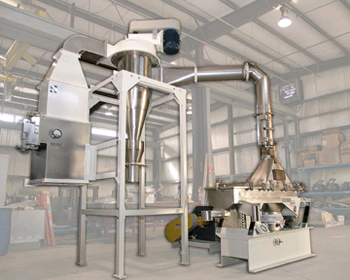
(https://www.witte.com/new-food-grade-process-equipment-integrates-drying-classifying-and-fines-collection-in-a-single-sanitary-sound-attenuated-pilot-sized-unit/)
- Most structural materials are made of stainless steel. Hygienic design that meets USDA, FDA, and 3-A standards*2.
- Tool-free disassembly enables easy cleaning and inspection across drying, cooling, and classification sections—supporting efficient maintenance and contamination prevention.
*1 from official Website (https://www.v-dryer.jp/dryingtest.html)
*2 Related to contact with food and dairy products.