Fluid Bed Dryer Advantages and Disadvantages: Balancing Efficiency and Process Constraints
This article outlines the advantages and disadvantages of general fluid bed dryers. It also introduces technologies that can help overcome challenges.
The Role of Fluid Bed Dryers in Modern Process Industries
Fluid bed dryers are equipment designed to efficiently dry powders and particles. A key feature is that they can dry a wide range of materials, including food, pharmaceuticals, and plastics, in large quantities in a short time. They are used in many factories across industries such as manufacturing, chemicals, food, and pharmaceuticals.
Main Advantages of
Using Fluid Bed Dryers
High Thermal Efficiency and Rapid Heat Exchange
Fast drying is a key advantage. Hot air suspends powders and particles, allowing air to contact the entire surface of the material. Because heat is distributed more evenly than in static drying methods, it can reduce drying time.
Consistent Product Quality
Inside the dryer, powders and particles are constantly moving and mixing as they dry. Because the entire material is processed at nearly the same temperature, a key advantage is that uneven drying is less likely to occur. It can help prevent under-drying and over-drying, resulting in more consistent quality.
A Multifunctional Process in a Single Unit
There are also products that can handle multiple processes in a single unit, including drying, cooling, granulation, and coating. Because there is no need to transfer material between units, this reduces the risk of contamination from foreign matter. It also helps save equipment space and simplify the process.
Suitable for Delicate Materials
In products without internal stirring blades, physical force is not applied directly, which helps minimize damage to the materials. Because low-temperature drying is also possible, it is suitable for delicate materials such as heat-sensitive enzymes and food.
Technical Challenges and Disadvantages of Fluid Bed Dryers
The Risk of Cross-Contamination
While contamination during transfer can be reduced, cross-contamination remains a key concern. If internal cleaning is insufficient, powder from the previous process may remain in structural areas. If this powder mixes with the material in the next process, it can cause cross-contamination, or foreign matter contamination between products, leading to reduced product quality.
Contamination from Ambient Air
Because fluid bed dryers take in a large volume of outside air for drying, insufficient intake filtration can create a risk of dust and foreign matter from the atmosphere entering the system. In food and pharmaceutical manufacturing, where high cleanliness is required, advanced air handling control is necessary.
Fine Powder Generation and Dust Collection Measures
Although there is no damage from stirring blades, there is a risk of wear particles being generated as particles collide with each other in the airflow. Dust collection systems and exhaust design must be carefully managed to prevent powder from leaking out and contaminating other products.
Technologies to Overcome These Disadvantages
Advantages of Vibrating Fluid Beds
In a vibrating fluid bed dryer, which adds vibration to a typical fluid bed dryer, it is possible to process substances that tend to stick and materials with high moisture content. By applying micro-vibrations throughout the entire unit, it helps break up clumps and supports the drying of materials that are difficult to fluidize with air alone. This expands the range of materials that can be processed compared with conventional methods.
Integrating Indirect Heating
There is also an indirect heating method that incorporates heat transfer tubes and heating panels into the unit in addition to hot air. This method can supply heat efficiently while reducing air volume. It is also effective for reducing exhaust volume, saving energy, and lowering operating costs.
Key Points for Choosing the Right Product
Analysis of Material Properties
Before implementation, it is necessary to understand the material properties, such as particle size, moisture content, and heat resistance. If this information is insufficient, it may not be possible to select the right model, determine the appropriate equipment size, or set operating conditions, resulting in performance that does not meet expectations.
Availability of
Test Equipment
Rather than relying solely on catalog specifications, check whether test runs using the actual material are possible. By evaluating under conditions close to actual production, it is possible to assess drying performance and quality in advance.
Making the Right Choice Based on the Advantages and Disadvantages of Fluid Bed Dryers
General fluid bed dryers have challenges such as difficult cleaning and the risk of foreign matter contamination. By choosing products equipped with vibration and indirect heating technology, it is possible to dry materials to a high standard of quality.
The target materials vary by industry, but the more expensive the material, the higher the quality required of the dryer. The following article introduces recommended vibrating dryers by industry.
Electronics Manufacturing
- Barium titanate
- Silicon carbide
- Alumina
(VH Type)CHUO KAKOHKI (JPN)

(https://www.chuokakohki.co.jp/dryer.html)
- Ideal for Purity-critical materials like SiC. Sliding-part-free design prevents contamination, while vacuum drying protects against thermal degradation.
- Precision developed through more than 200 drying tests each year*1 delivers uniform drying while preserving material properties, contributing to high-quality semiconductor production and improved productivity.
Fuel Production
- Coal
- Aggregates and industrial sand
- Wood chips

(https://carriervibrating.com/equipment/dryers/)
- Unique electronic control automatically adjusts to different drying times based on the type and condition of minerals and sand.
- Vibration intensity and feed speed adjust according to moisture content and viscosity, helping reduce variation in moisture content.
Food Manufacturing
- Granulated food powders
- Active pharmaceutical ingredients
- Plant-based protein
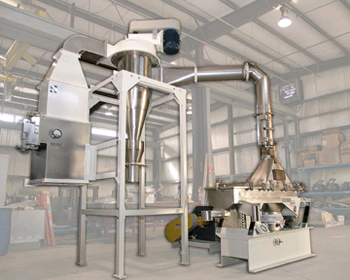
(https://www.witte.com/new-food-grade-process-equipment-integrates-drying-classifying-and-fines-collection-in-a-single-sanitary-sound-attenuated-pilot-sized-unit/)
- Most structural materials are made of stainless steel. Hygienic design that meets USDA, FDA, and 3-A standards*2.
- Tool-free disassembly enables easy cleaning and inspection across drying, cooling, and classification sections—supporting efficient maintenance and contamination prevention.
*1 from official Website (https://www.v-dryer.jp/dryingtest.html)
*2 Related to contact with food and dairy products.