Circular Motion Vibratory Dryer
This article explains the definition, working principles, and structural and technical benefits of a circular motion vibratory dryer. Key points for product selection are also summarized.
What Is a Circular Motion Vibratory Dryer?
It is a vibrating dryer that creates three-dimensional spiral circulation without using agitation blades, helping reduce material retention and achieve uniform drying and cooling. A special vibration motor is attached to a vertical cylindrical vessel, allowing the material being dried to circulate upward and downward while rotating around the circumference.
Why Circular Motion
Works Well
This is because the material rotates around the circumference while circulating upward and downward, creating three-dimensional movement that distributes contact with heat and makes it easier to reduce uneven drying. Because a mixed state can be created without using agitation blades, it is also easier to reduce the risk of breakage caused by contact with the blades and contamination from sliding parts.
Technical Benefits of
the Circular Motion Vibratory Dryer
Maximizing Heat Transfer Area Within a Small Footprint
Because the drying trough is vertical, a circular motion vibratory dryer can be installed efficiently even in limited space. As the material moves three-dimensionally while rotating, it increases the effective travel distance, or contact time with heat, while also supporting a compact installation footprint. This is a strong option for sites with physical space constraints.
Achieving a Uniform Thermal History Through Complete Mixing
Because the material inside the dryer circulates continuously and contacts the heating surface evenly, it helps prevent uneven drying. Differences in thermal history within the material, which are often a challenge in batch processing, can also be addressed structurally with a circular motion vibratory dryer.
Deagglomeration and Dispersion During Drying
Vibration naturally breaks up agglomerates, or clumps, that tend to form during drying. Even with materials that are prone to agglomeration, such as nanoparticles and slurry-derived raw materials, circulation helps maintain a state in which they are less likely to form clumps. This makes it possible to recover materials in a highly free-flowing state.
Precision Circular Motion Over Conventional Drying
Approaches for High-Viscosity and Adhesion-Prone Materials
Materials with high adhesiveness or viscosity may stick to the wall during drying or develop uneven distribution inside the dryer. A precise circular motion vibratory dryer allows for settings tailored to material characteristics. By adjusting the strength and motion of the vibration, it helps reduce material retention and clogging.
Low-Temperature Drying for Heat-Sensitive Materials
Through circular motion, the material is continuously exposed to heat while circulating. Because of its high thermal efficiency, drying is possible without raising the temperature more than necessary. This type of drying is suitable for materials whose quality changes need to be avoided, such as pharmaceuticals and functional materials.
Key Points for Selecting a Circular Motion Vibratory Dryer
Vibration Control to Prevent Particle Damage
It is important to confirm whether vibration intensity (G-force) and amplitude can be adjusted according to the characteristics of the material. If the vibration is too strong, it can damage the material, while if it is too weak, it can lead to inadequate drying. Vibration conditions must be set so that the material is not damaged while drying efficiency is maximized.
Corrosion Resistance, Pressure Resistance, and Lining Applicability
If corrosion and oxidation are concerns, choose products that support corrosion-resistant coatings or vacuum specifications. Additionally, a cylindrical shape is recommended because it can distribute pressure evenly. Because the internal structure is simple, coatings can be applied without gaps, helping reduce the risk of corrosion.
Whether a Contamination-Free Design Is Available
Because a circular motion vibratory dryer has no internal stirring shaft or shaft seals, it can structurally prevent contamination risk from sliding parts. It is also easy to clean, making it effective for pharmaceutical and food production lines that require high hygiene standards.
Summary
A circular motion vibratory dryer is equipment designed to solve issues with installation space, contamination, and cleanability that are common with linear and agitation-type dryers. Because these dryers achieve uniform drying without damaging the material, they can be considered an equipment investment that helps prevent quality issues.
The following article features recommended vibrating dryers selected by industry and material type. It also includes manufacturers that offer circular motion vibratory dryers, which may be worth checking if you are interested.
Electronics Manufacturing
- Barium titanate
- Silicon carbide
- Alumina
(VH Type)CHUO KAKOHKI (JPN)

(https://www.chuokakohki.co.jp/dryer.html)
- Ideal for Purity-critical materials like SiC. Sliding-part-free design prevents contamination, while vacuum drying protects against thermal degradation.
- Precision developed through more than 200 drying tests each year*1 delivers uniform drying while preserving material properties, contributing to high-quality semiconductor production and improved productivity.
Fuel Production
- Coal
- Aggregates and industrial sand
- Wood chips

(https://carriervibrating.com/equipment/dryers/)
- Unique electronic control automatically adjusts to different drying times based on the type and condition of minerals and sand.
- Vibration intensity and feed speed adjust according to moisture content and viscosity, helping reduce variation in moisture content.
Food Manufacturing
- Granulated food powders
- Active pharmaceutical ingredients
- Plant-based protein
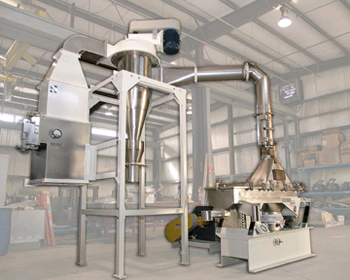
(https://www.witte.com/new-food-grade-process-equipment-integrates-drying-classifying-and-fines-collection-in-a-single-sanitary-sound-attenuated-pilot-sized-unit/)
- Most structural materials are made of stainless steel. Hygienic design that meets USDA, FDA, and 3-A standards*2.
- Tool-free disassembly enables easy cleaning and inspection across drying, cooling, and classification sections—supporting efficient maintenance and contamination prevention.
*1 from official Website (https://www.v-dryer.jp/dryingtest.html)
*2 Related to contact with food and dairy products.