Fluid Bed Dryer Performance Qualification
This article explains what fluid bed dryer performance qualification (PQ) verifies, how it differs from installation and operational qualification, and what design features make it easier to pass consistently.
What Performance Qualification Actually Verifies
Performance qualification confirms that fluid bed dryers produce consistent, acceptable results using the actual product and production conditions dryers will run under day to day, not using water, placebo materials, or idealized test conditions. It answers a specific question: do the dryers reliably meet moisture, uniformity, and quality targets when running real batches, batch after batch?
Where PQ Fits in the Qualification Sequence
PQ is the last of three qualification stages. Installation qualification (IQ) confirms dryers were installed and set up according to proper specifications. Operational qualification (OQ) confirms that equipment operates as intended throughout its anticipated operating ranges, while PQ confirms that the equipment can perform effectively and reproducibly under real operating conditions based on the approved process method and specifications.
What a Fluid Bed Dryer PQ Protocol Typically Covers
A typical protocol checks moisture content at multiple points across the bed to confirm materials have dried evenly rather than only at the edges or near the air inlet, and repeats this across several consecutive batches. The number of qualification or validation runs should be justified based on the process and protocols to confirm the result isn't a one-time success. Some protocols also confirm that cleaning between batches consistently brings residual materials below an acceptable limit before the next qualification run begins.
What Makes PQ Harder to Pass for Fluid Bed Dryers Specifically
Raw materials rarely behave identically from lot to lot: small shifts in incoming moisture content, particle size, or ambient humidity can change how a batch fluidizes and dries, even when the equipment itself hasn't changed. A dryer that passed PQ under one set of material conditions can produce a batch that falls outside qualified ranges under slightly different conditions — see our article on the working principle for why the same equipment behaves differently depending on material characteristics.
Design Features That Support Consistent PQ Results
Dryers with airflow and temperature sensors that allow fine adjustment mid-batch make it easier to compensate for small material variations before they affect the outcome. A simple, easily cleaned internal structure reduces the chance that residual materials from a previous run affect the next qualification batch. Where materials vary in stickiness or particle size, a vibrating fluid bed dryer's ability to fluidize in a wider range of conditions can reduce the number of batches that drift outside the qualified range.
Electronics Manufacturing
- Barium titanate
- Silicon carbide
- Alumina
(VH Type)CHUO KAKOHKI (JPN)

(https://www.chuokakohki.co.jp/dryer.html)
- Ideal for Purity-critical materials like SiC. Sliding-part-free design prevents contamination, while vacuum drying protects against thermal degradation.
- Precision developed through more than 200 drying tests each year*1 delivers uniform drying while preserving material properties, contributing to high-quality semiconductor production and improved productivity.
Fuel Production
- Coal
- Aggregates and industrial sand
- Wood chips

(https://carriervibrating.com/equipment/dryers/)
- Unique electronic control automatically adjusts to different drying times based on the type and condition of minerals and sand.
- Vibration intensity and feed speed adjust according to moisture content and viscosity, helping reduce variation in moisture content.
Food Manufacturing
- Granulated food powders
- Active pharmaceutical ingredients
- Plant-based protein
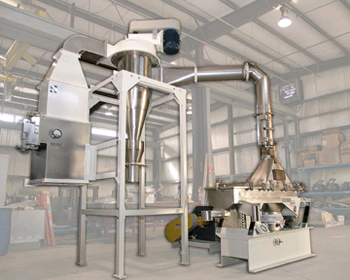
(https://www.witte.com/new-food-grade-process-equipment-integrates-drying-classifying-and-fines-collection-in-a-single-sanitary-sound-attenuated-pilot-sized-unit/)
- Most structural materials are made of stainless steel. Hygienic design that meets USDA, FDA, and 3-A standards*2.
- Tool-free disassembly enables easy cleaning and inspection across drying, cooling, and classification sections—supporting efficient maintenance and contamination prevention.
*1 from official Website (https://www.v-dryer.jp/dryingtest.html)
*2 Related to contact with food and dairy products.