Metal Contamination in Fluid Bed Dryers
This article explains where metal contamination actually originates inside a fluid bed dryer, why it matters far more for some materials than others, and which design choices remove the contamination source rather than just reducing it.
Where Metal Contamination Actually Comes From
Most metal contamination in a fluid bed dryer traces back to moving parts: bearings, mechanical seals, or rotating shafts on units that use mechanical agitation alongside airflow. As these parts wear, they shed fine metal particles directly into the material stream, and because the wear happens gradually, the contamination level can drift upward for a long time before anyone notices.
A second source is abrasion rather than wear: particles colliding with internal steel surfaces at high velocity can scrape off microscopic metal fragments, especially in units with sharp internal geometry or poorly finished welds where material repeatedly impacts the same spot.
Why Trace Contamination Matters Far More for Some Materials
For most bulk materials, a few parts per million of metal contamination changes nothing. For battery cathode and anode materials, the same trace amount can trigger internal short circuits or degrade cell performance, which is why manufacturers track contamination in parts per million rather than treating it as a pass/fail inspection. Semiconductor-grade materials carry a similar tolerance, where a contamination level considered negligible in most industries is enough to fail a customer's incoming inspection.
Why Contamination Is Often Missed Until It's a Problem
Metal contamination at these levels isn't visible to the eye, and it doesn't necessarily show up in every batch — a bearing that's just starting to wear might shed particles intermittently rather than constantly. Confirming it requires elemental analysis such as ICP-MS, and because the equipment often looks and runs normally, contamination is frequently discovered only after a customer's quality inspection flags it, well after the affected batches have shipped.
Design Choices That Reduce Metal Contamination
Conventional fixes focus on slowing the wear down: better seal materials, more frequent bearing replacement, or smoother internal welds that reduce abrasion. These measures help, but they don't remove the underlying source — a bearing or seal is still there, and it will still wear.
Why Removing Rotating Parts Eliminates the Source Rather Than Managing It
A vibrating fluid bed dryer moves material by vibrating the entire vessel rather than using an internal rotating shaft to agitate it. Without a shaft, there's no bearing or mechanical seal inside the drying chamber to wear down in the first place, which turns metal contamination from a maintenance item you manage into a failure mode that doesn't exist in that unit.
Where Metal Contamination Prevention Actually Starts
Metal contamination in a fluid bed dryer almost always comes from parts that move against each other: bearings, seals, and abrasive contact with internal surfaces. For materials where trace metal levels matter, such as battery and semiconductor-grade materials, reducing wear isn't the same as removing the source — only a design without internal rotating parts does that.
The following article introduces recommended vibrating dryers by industry.
Electronics Manufacturing
- Barium titanate
- Silicon carbide
- Alumina
(VH Type)CHUO KAKOHKI (JPN)

(https://www.chuokakohki.co.jp/dryer.html)
- Ideal for Purity-critical materials like SiC. Sliding-part-free design prevents contamination, while vacuum drying protects against thermal degradation.
- Precision developed through more than 200 drying tests each year*1 delivers uniform drying while preserving material properties, contributing to high-quality semiconductor production and improved productivity.
Fuel Production
- Coal
- Aggregates and industrial sand
- Wood chips

(https://carriervibrating.com/equipment/dryers/)
- Unique electronic control automatically adjusts to different drying times based on the type and condition of minerals and sand.
- Vibration intensity and feed speed adjust according to moisture content and viscosity, helping reduce variation in moisture content.
Food Manufacturing
- Granulated food powders
- Active pharmaceutical ingredients
- Plant-based protein
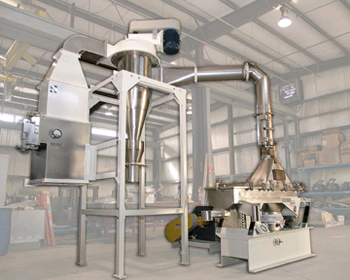
(https://www.witte.com/new-food-grade-process-equipment-integrates-drying-classifying-and-fines-collection-in-a-single-sanitary-sound-attenuated-pilot-sized-unit/)
- Most structural materials are made of stainless steel. Hygienic design that meets USDA, FDA, and 3-A standards*2.
- Tool-free disassembly enables easy cleaning and inspection across drying, cooling, and classification sections—supporting efficient maintenance and contamination prevention.
*1 from official Website (https://www.v-dryer.jp/dryingtest.html)
*2 Related to contact with food and dairy products.