Batch Type Horizontal Vibration Dryer
This article explains the advantages of batch-type horizontal vibratory dryers and key points for selecting the right model.
Why Batch-Type Horizontal Vibrating Dryers Are Chosen
Ensuring Traceability
Batch-type systems can record when each batch was processed, which materials were used, and under what conditions. Even if a defect occurs, the affected batch can be identified, helping contain the impact. This design is well suited to industries such as semiconductors and pharmaceuticals, where control accuracy is prioritized over production efficiency.
Advantages of Horizontal Vibration
The drying trough is arranged horizontally so that gravity and vibration can spread the material evenly. A key advantage is that, because heat is distributed evenly throughout the material, it can be finished in a high-quality state with no uneven drying.
Advantages of Batch-Type Horizontal Vibrating Dryers
High Material Recovery Rates
Because these dryers allow input amount, operating conditions, and processing time to be managed consistently for each batch, they help reduce raw material loss and improve traceability. Designs that optimize the shape of the discharge section and reduce internal dead space help minimize material retention and improve recovery rates.
Multifunctional Batch Processing
Typically, separate machines are required for mixing, drying, and cooling, but some batch-type systems can handle the cooling step in the same chamber after drying. This reduces the need to transfer materials and also helps reduce the risk of foreign matter contamination.
Reducing Cross-Contamination Risk Through Equipment Design
Cleanability
Batch-type interiors often use designs and surface treatments that reduce steps and gaps, making it less likely for powder to adhere. Because the interior is easy to inspect visually and the structure allows access to every corner, cleaning is easier, which is a key advantage. This design helps reduce the risk of contamination in the next process.
Isolation from Ambient Air
Depending on the specifications, some systems are designed with a sealed structure and atmosphere control, making it easier to reduce the risk of contamination from external sources.
Key Points for Appropriate Product Selection and Investment Decisions
Combining Vacuum and Vibration Technologies
By creating a vacuum inside, moisture can evaporate more easily even at low temperatures, helping prevent changes in the components of heat-sensitive materials. Vacuum-compatible models tend to require a higher initial investment because of their more complex configuration, but they can be a strong option for sites that require low-temperature drying and reduced oxidation and thermal degradation.
Adapting to Material Characteristics
Particle size, adhesiveness, and heat resistance vary depending on the material. If the dryer allows fine adjustment of frequency and amplitude, it can dry materials under conditions suited to their properties. This helps reduce quality degradation.
Batch Verification Using Test Equipment
Before implementation, test the full process of charging, drying, cooling, and discharge, and confirm whether the resulting product meets the required quality standards. Manufacturers that can conduct testing on actual equipment and have a proven track record in quality evaluation are recommended.
Summary
For sites that prioritize quality, batch-type horizontal vibratory dryers are a strong option. When making a selection, it is helpful to check whether vacuum compatibility is available, how widely frequency and amplitude can be adjusted, and whether pre-installation testing is possible. The following article introduces recommended vibrating dryers.
Electronics Manufacturing
- Barium titanate
- Silicon carbide
- Alumina
(VH Type)CHUO KAKOHKI (JPN)

(https://www.chuokakohki.co.jp/dryer.html)
- Ideal for Purity-critical materials like SiC. Sliding-part-free design prevents contamination, while vacuum drying protects against thermal degradation.
- Precision developed through more than 200 drying tests each year*1 delivers uniform drying while preserving material properties, contributing to high-quality semiconductor production and improved productivity.
Fuel Production
- Coal
- Aggregates and industrial sand
- Wood chips

(https://carriervibrating.com/equipment/dryers/)
- Unique electronic control automatically adjusts to different drying times based on the type and condition of minerals and sand.
- Vibration intensity and feed speed adjust according to moisture content and viscosity, helping reduce variation in moisture content.
Food Manufacturing
- Granulated food powders
- Active pharmaceutical ingredients
- Plant-based protein
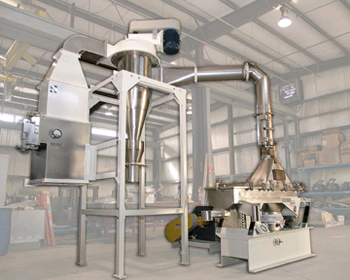
(https://www.witte.com/new-food-grade-process-equipment-integrates-drying-classifying-and-fines-collection-in-a-single-sanitary-sound-attenuated-pilot-sized-unit/)
- Most structural materials are made of stainless steel. Hygienic design that meets USDA, FDA, and 3-A standards*2.
- Tool-free disassembly enables easy cleaning and inspection across drying, cooling, and classification sections—supporting efficient maintenance and contamination prevention.
*1 from official Website (https://www.v-dryer.jp/dryingtest.html)
*2 Related to contact with food and dairy products.