Indirect Heating Vibratory Dryer
An indirect heating vibratory dryer is a drying method that does not apply hot air directly to the material. This article explains its advantages and key points for product selection.
Advantages of Indirect heating Vibratory Dryers
Minimal Changes in Chemical Properties
Because indirect heating does not apply hot air directly to the material, it helps prevent oxidation caused by oxygen in the air, thermal decomposition, and flavor loss, which is a key advantage. It is also less likely to cause particle wear or breakage because it does not rely on a large volume of air for vigorous agitation, making it suitable for drying delicate materials.
Uniform Product Quality
Because the material continues to move due to vibration, it repeatedly comes into contact with the heating surface, allowing heat to transfer efficiently. A key advantage is that heat is distributed evenly throughout the material.
Lower Contamination Risk with Closed Systems
Indirect heating vibratory dryers can be designed to minimize contact between ambient air and the product zone, helping reduce the risk of contamination from external sources such as dust and dirt. They help maintain stable quality for materials that require high purity.
Cross-Contamination Prevention and
Sanitary Design
Because designs that make it easier to reduce residue during cleaning and changeovers can be selected, it helps reduce cross-contamination caused by carryover from the previous batch. This feature can be useful when you want to reduce quality risks in high-mix production.
Reduced Fine Powder Generation
Because indirect heating vibratory dryers do not use strong airflow to dry materials, they help prevent fine powder from scattering, thereby reducing surrounding contamination and product loss. They are also effective for improving the yield of expensive raw materials.
Vibration + Indirect Heating:
A Hybrid Approach
Compared with hot air systems, indirect heating tends to transfer heat more gently, which can make drying speed and thermal efficiency a challenge depending on the operating conditions. This is why systems that combine indirect heating with vibration are gaining attention.
Advantages of
Adding Vibration
The main reason for adding vibration to indirect heating is to increase how often the material comes into contact with the heater (heating surface). Vibration stirs the material, physically increasing the heat transfer coefficient (how easily heat is transferred). It helps compensate for the lower thermal efficiency of indirect heating and improves drying speed.
Integration with
Vacuum Technology
Performance can be further improved by combining vibration with technology that creates a vacuum inside the dryer. Under vacuum, moisture evaporates even at lower temperatures, making it possible to dry delicate, heat-sensitive materials without causing thermal degradation or deterioration. Sites that require higher quality can benefit more from vacuum technology.
How to Make Appropriate Product Selection and Investment Decisions
The Relationship Between
Price and Quality
The higher the required quality, the more important it is to base dryer selection not only on price, but also on contamination risk and operating costs. When viewed from a medium- to long-term perspective, investing in dryers that can ensure quality contributes to cost reduction.
The Importance of
Full-Scale Testing Based on Material Properties
Because heat transfer and drying performance vary depending on the material, it is recommended to conduct full-scale testing before implementation. To help prevent mismatches after implementation, choose manufacturers with a proven track record in test equipment and quality evaluation.
Summary
If your top priority is large-volume drying in a single process, a typical hot air dryer may be sufficient. However, if you prioritize quality, such as preventing contamination and preserving material properties, an indirect heating vibratory dryer may be a better fit.
The following article introduces recommended vibrating dryers by industry.
Electronics Manufacturing
- Barium titanate
- Silicon carbide
- Alumina
(VH Type)CHUO KAKOHKI (JPN)

(https://www.chuokakohki.co.jp/dryer.html)
- Ideal for Purity-critical materials like SiC. Sliding-part-free design prevents contamination, while vacuum drying protects against thermal degradation.
- Precision developed through more than 200 drying tests each year*1 delivers uniform drying while preserving material properties, contributing to high-quality semiconductor production and improved productivity.
Fuel Production
- Coal
- Aggregates and industrial sand
- Wood chips

(https://carriervibrating.com/equipment/dryers/)
- Unique electronic control automatically adjusts to different drying times based on the type and condition of minerals and sand.
- Vibration intensity and feed speed adjust according to moisture content and viscosity, helping reduce variation in moisture content.
Food Manufacturing
- Granulated food powders
- Active pharmaceutical ingredients
- Plant-based protein
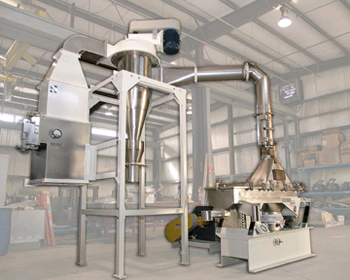
(https://www.witte.com/new-food-grade-process-equipment-integrates-drying-classifying-and-fines-collection-in-a-single-sanitary-sound-attenuated-pilot-sized-unit/)
- Most structural materials are made of stainless steel. Hygienic design that meets USDA, FDA, and 3-A standards*2.
- Tool-free disassembly enables easy cleaning and inspection across drying, cooling, and classification sections—supporting efficient maintenance and contamination prevention.
*1 from official Website (https://www.v-dryer.jp/dryingtest.html)
*2 Related to contact with food and dairy products.