Energy Efficiency in Fluid Bed Drying
This article explains where energy actually goes in a fluid bed dryer, why reducing airflow volume matters more for energy use than adjusting temperature, and where electric heating fits into the push to decarbonize drying processes.
Where Energy Actually Goes in a Fluid Bed Dryer
Most of the energy a fluid bed dryer consumes goes into moving and heating a large volume of air, not simply supplying heat to the material. Fan power to push that air through the bed and the energy needed to raise its temperature both scale with air volume, so a unit that requires more airflow to fluidize its material carries a higher energy cost baked into its basic operating mode, independent of how well-insulated or efficient its heater is.
Why Air Volume Drives Energy Cost More Than Temperature Does
Fan power rises roughly with the cube of airflow, so doubling the airflow through a bed to fluidize a difficult material can push fan power up several times over, while the energy needed to heat that air increases in rough proportion to its volume. The temperature setting, by comparison, is easy to adjust without anywhere near the same energy penalty. This is why the biggest efficiency gains in fluid bed drying usually come from reducing how much air a process needs, not from tuning the temperature it runs at.
How Reducing Air Volume Requirements Cuts Energy Use
Vibration reduces the airflow needed to fluidize a given material, since mechanical energy takes over part of the work that air alone would otherwise have to do. Indirect heating adds to this by supplying heat through a jacket or heating panels rather than through the air itself, which means less hot air needs to be generated and pushed through the bed to reach the same drying result.
The Shift Toward Electric Heating and Decarbonization
Replacing gas-fired heating with electric resistance heating removes on-site fossil fuel combustion entirely, and electric elements can convert more than 95% of the energy they consume into usable heat. Electricity has historically cost more per unit of energy than gas in many regions, which is part of why electrification hasn't been the default choice, but pairing it with a lower air volume requirement reduces the total energy a unit needs to buy in the first place, narrowing that cost gap.
What to Weigh Before Prioritizing Energy Efficiency
An efficiency claim based on a manufacturer's theoretical air volume or heater rating doesn't guarantee the same result on your actual material, since real airflow requirements depend on how that specific material fluidizes. Confirming energy performance with a test run on the actual material, rather than a generic efficiency figure, is what separates a real energy saving from one that only holds up in ideal conditions.
Cutting Air Volume Is the Real Lever for Energy Efficiency
Energy use in a fluid bed dryer is driven mainly by how much air has to be moved and heated, not by the temperature setting alone. Vibration and indirect heating both cut that air volume requirement, which is also what makes electric heating a more practical option as processes look to decarbonize.
The following article introduces recommended vibrating dryers by industry.
Electronics Manufacturing
- Barium titanate
- Silicon carbide
- Alumina
(VH Type)CHUO KAKOHKI (JPN)

(https://www.chuokakohki.co.jp/dryer.html)
- Ideal for Purity-critical materials like SiC. Sliding-part-free design prevents contamination, while vacuum drying protects against thermal degradation.
- Precision developed through more than 200 drying tests each year*1 delivers uniform drying while preserving material properties, contributing to high-quality semiconductor production and improved productivity.
Fuel Production
- Coal
- Aggregates and industrial sand
- Wood chips

(https://carriervibrating.com/equipment/dryers/)
- Unique electronic control automatically adjusts to different drying times based on the type and condition of minerals and sand.
- Vibration intensity and feed speed adjust according to moisture content and viscosity, helping reduce variation in moisture content.
Food Manufacturing
- Granulated food powders
- Active pharmaceutical ingredients
- Plant-based protein
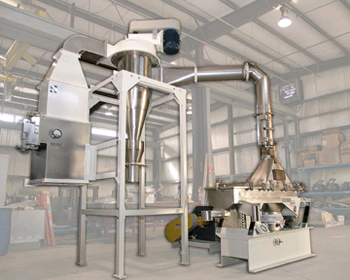
(https://www.witte.com/new-food-grade-process-equipment-integrates-drying-classifying-and-fines-collection-in-a-single-sanitary-sound-attenuated-pilot-sized-unit/)
- Most structural materials are made of stainless steel. Hygienic design that meets USDA, FDA, and 3-A standards*2.
- Tool-free disassembly enables easy cleaning and inspection across drying, cooling, and classification sections—supporting efficient maintenance and contamination prevention.
*1 from official Website (https://www.v-dryer.jp/dryingtest.html)
*2 Related to contact with food and dairy products.